Join our glowing tribe 😊
Join our growing community of parents, grandparents, educators, and carers raising kind-hearted children.
✓ Launch updates
✓ Early access to pre-orders
✓ A beautiful printable affirmation card
Join our glowing tribe 😊
Join our growing community of parents, grandparents, educators, and carers raising kind-hearted children.
✓ Launch updates
✓ Early access to pre-orders
✓ A beautiful printable affirmation card
At my boys' school swimming carnival, I promised my youngest he could choose dinner for trying, not for winning. Why giving it a go deserves celebrating, ribbon or not.
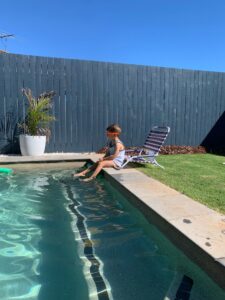
Last week was my boys’ school swimming carnival.
The day before, my youngest was feeling a little unsure. So we spent half an hour in our pool at home, practising. Nothing serious. Just him, the water, and me watching from the edge. Lap by lap, I could see something settle in him. His strokes grew steadier. His shoulders dropped. He started to believe he could do it.
Then, as he climbed out, came the question:
“If I win a ribbon, can I choose dinner?”
I didn’t have to think about it.
“Yes, you can choose dinner. For giving it a go. You don’t need a ribbon for that.”
We talked for a while after that. About trying his best. About enjoying the day: the noise, the cheering, his friends in the next lane. About how coming first isn’t the only thing that matters, and how it was never the reason he was going.
It was a small conversation, the kind that happens between a towel and the dinner table. But it’s stayed with me all week. I think it holds something I want every child to know.
Trying is brave.
Standing on the edge of a pool, with a whole school watching, when you’re not sure you’ll be fast enough. That takes courage. So does putting your hand up when you might have the wrong answer, or kicking the ball when you might miss. So does saying hello to someone new.
When we only celebrate the result, children can learn without meaning to that the brave part doesn’t count. The trying happens in private, in the backyard pool the day before, and only the ribbon gets noticed.
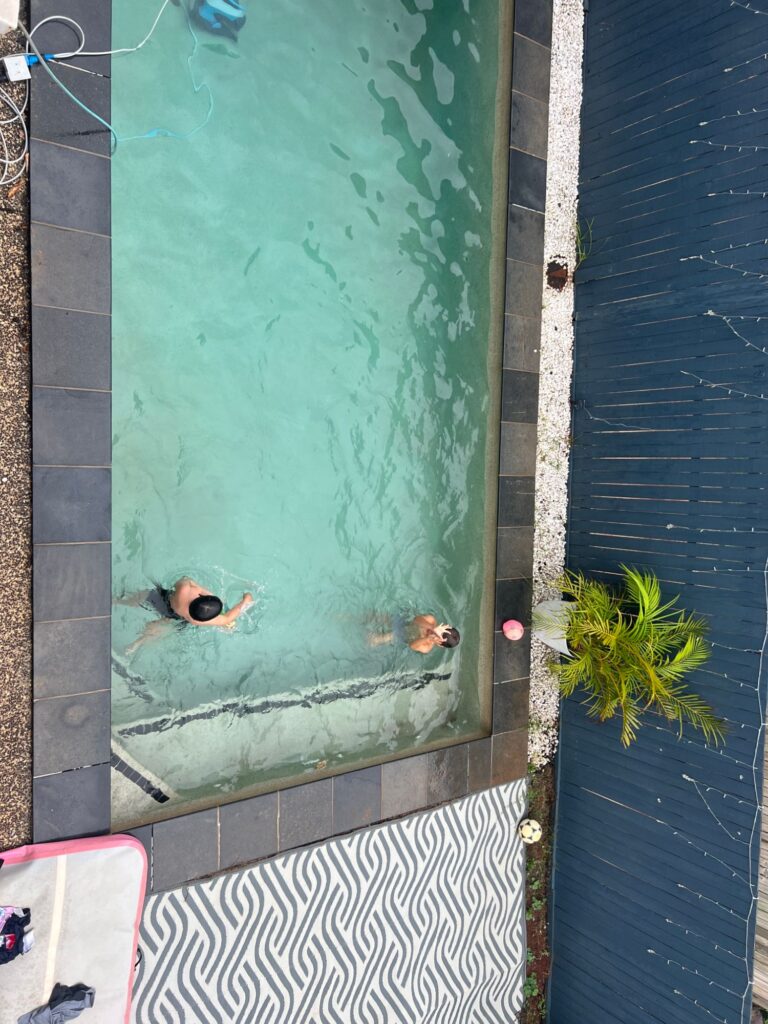
I’d love for it to be the other way around. I want the trying to be the part we notice most. The ribbon is lovely when it comes, but it’s a bonus, not the point.
This isn’t about pretending winning doesn’t feel wonderful. It does. When a child comes first, or finally swims the whole length, or gets the ribbon they’ve been dreaming of, that’s joy. Celebrate it. Cheer loudly. Let them choose dinner and dessert.
But there’s a quieter truth sitting right beside that joy.
Some children will go to every carnival, every sports day, every competition, and come home with very few ribbons. Maybe none.
They try just as hard. They feel the same nerves on the starting block. They’re just as brave. And they deserve every bit as much celebrating.
A child who comes last, and still swims all the way to the wall, has done something worth honouring. So has the child who was scared to get in and got in anyway. And so has the child who cheered for their friends the whole afternoon.
None of these things come with a ribbon. All of them are worth celebrating.
Children spend so much of their lives learning how to achieve: to master the jump, to score the goal, to win the ribbon, to come first. Those things matter. But we hope children also learn something gentler underneath them: their worth doesn’t depend on winning, on being the best, or on having something to show for it.
It’s something I didn’t really understand until much later in life, and it runs quietly through Where Wonder Begins. There’s a line in the book I come back to often:
“You don’t need to be the best. You don’t have to have the most. You are already enough — just like everyone else.”
And another, about the light we each carry:
“The Light doesn’t choose favourites — every single one of us belongs.”
I thought of that line watching the carnival races. Every child in that pool belonged there, whatever their time.
If your child comes home from a carnival, sports day or a hard day of anything, here are a few things you might say. They work whether they won or not:
And if you want to borrow mine, you’re very welcome to: you can choose dinner for giving it a go.
My youngest came home without a ribbon. He came so close: fourth, twice.
My eldest came home with three. Two firsts and a third.
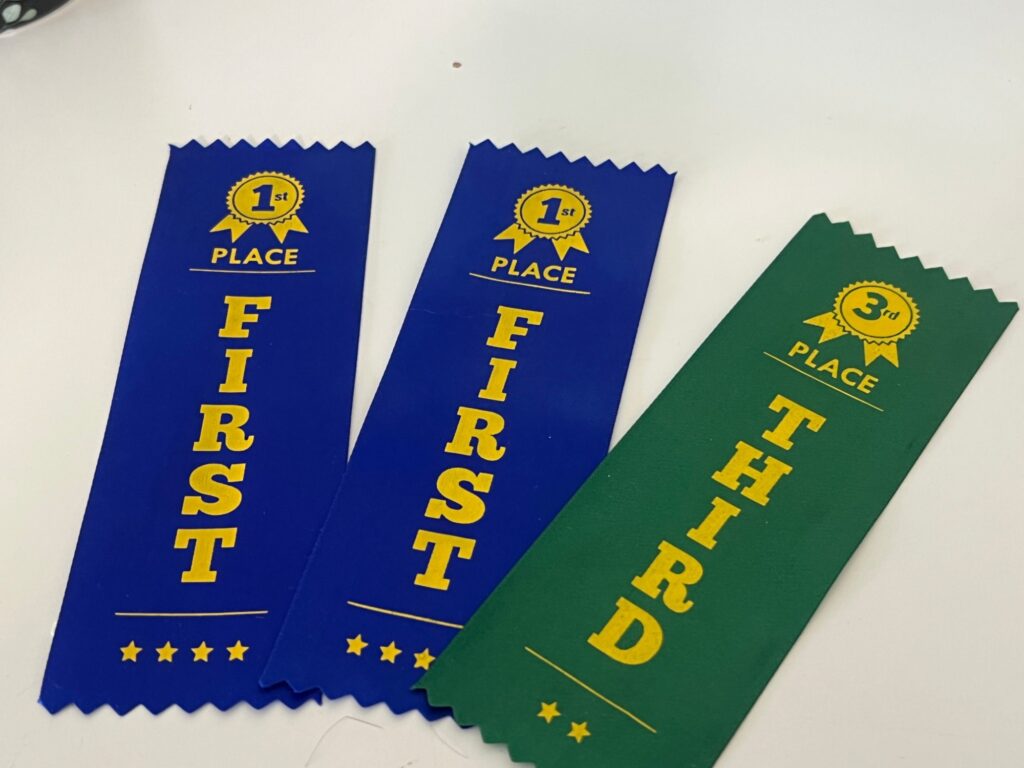
And here’s the part I’ll remember. They walked in the door just as happy as each other. One with ribbons in his hand, one without. Both proud. Both glowing. Both full of stories about the day.
They both chose dinner. Hot chips, of course.
A promise is a promise. And I meant it: giving it a go was always the part worth celebrating.
I don’t know exactly what my boys will remember about that carnival. Maybe the races. Maybe the cheering, or the hot chips afterwards.
But I hope my youngest remembers the night before. Standing in the pool, a little unsure, he heard that he was worth celebrating before he’d swum a single race. And I hope they both remember that dinner, sitting at the same table, celebrated the same way.
Whatever your child comes home with this season, a ribbon, a story, or simply tired legs and a sunburnt nose, they’re worth celebrating. 💛
Pure Light, Volume One: Where Wonder Begins is a hardcover picture book, written and illustrated by Ana Urban. It holds 27 verses gently inspired by the Tao Te Ching, each paired with a Glow Mo: a moment of reflection, imagination or stillness. It is not affiliated with any religion or belief system. Discover Pure Light →
More from the Journal: Faith, Fear & the Need to Believe in Something Bigger